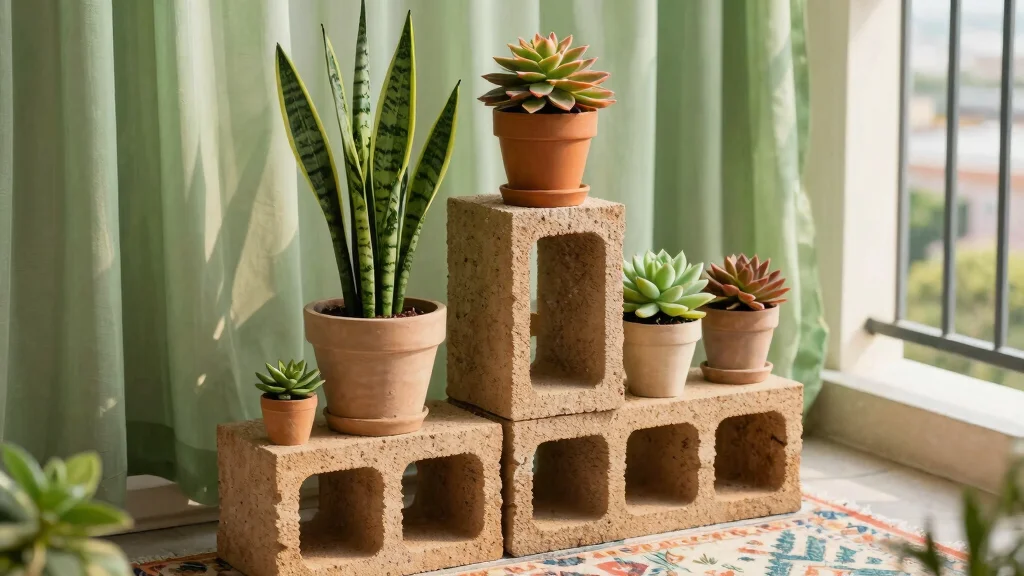
If you’ve ever found yourself drawn to the charm of urban gardening, you know the struggle of making your space both functional and stylish. Cinder block plant stands may seem basic at first glance, but they can transform your garden decor into something truly eye-catching. This post was born out of my desire to showcase how these simple building materials can add a modern twist to your outdoor furniture.
If you’re a city dweller, a DIY enthusiast, or anyone looking to inject personality into your home garden ideas, you’re in the right place. You care about creating a space that reflects who you are, even if you’re limited by size or budget. You want to know how to elevate your gardening game without breaking the bank.
In this post, I’ve compiled eight stylish cinder block plant stands that will inspire you to turn those gray blocks into a statement piece. Whether you’re looking for minimalist designs or vibrant, colorful arrangements, you’ll find ideas that are chic and practical. Get ready to discover how you can elevate your urban garden with creative and functional cinder block designs!
Key Takeaways
– Cinder block plant stands can be both stylish and functional, making them perfect for urban gardening decor.
– Each featured design caters to different aesthetics, from minimalist to colorful, allowing you to choose what fits your space best.
– Many of the ideas are DIY-friendly, encouraging you to get crafty and personalize your gardening experience.
– Consider combining cinder blocks with other materials like wood or metal for added visual interest.
– These stands not only serve as plant holders but also as unique outdoor furniture that enhances your garden’s overall look.
1. Minimalist Cinder Block Arrangement
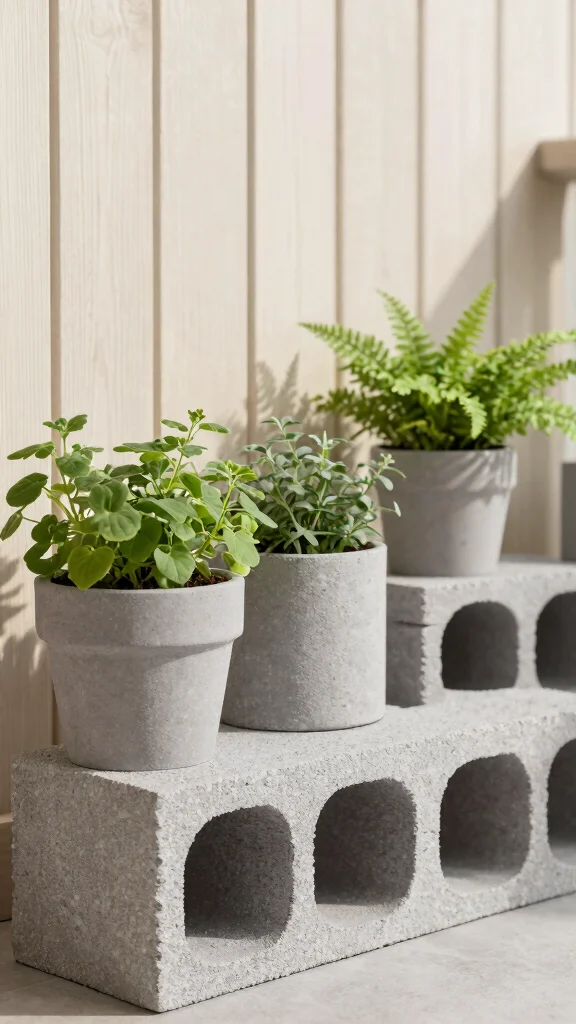
If you love a sleek and uncluttered look, a minimalist cinder block arrangement might be just what you need. This simple yet stylish setup turns ordinary blocks into a stunning plant stand, perfect for showcasing your greenery. You can position the blocks in a straight line or create a stair-step effect, making your plants the focal point of the design. It’s a practical solution for small spaces, allowing you to take advantage of vertical space effortlessly.
To achieve the best results with your minimalist stand, start by selecting a color palette for your pots that is cohesive and monochromatic. Use larger blocks for the foundation and gradually reduce the size as you stack upward. Mixing textures, such as incorporating matte and glossy finishes, adds depth to the arrangement.
Key tips for your minimalist design:
– Choose a cohesive color palette for pots.
– Stack larger blocks at the bottom, smaller on top.
– Incorporate different textures for visual appeal.
This approach not only enhances the visual impact of your plants but also provides a sturdy base. You’ll find that this design allows for easy plant rotation, keeping your outdoor space fresh and inviting.
Minimalist Cinder Block Arrangement
Editor’s Choice

Beuta Landscape Edging | Garden Edging Border | Faux Stone Blocks for La…


LE TAUCI Plant Pots, 4.1+5.1+6.5 inch, Set of 3, Ceramic Planters with D…

Frog-Shaped Plant Stand,Green Frog Plant Supports,Functional Home De…
2. Colorful Block Stacking
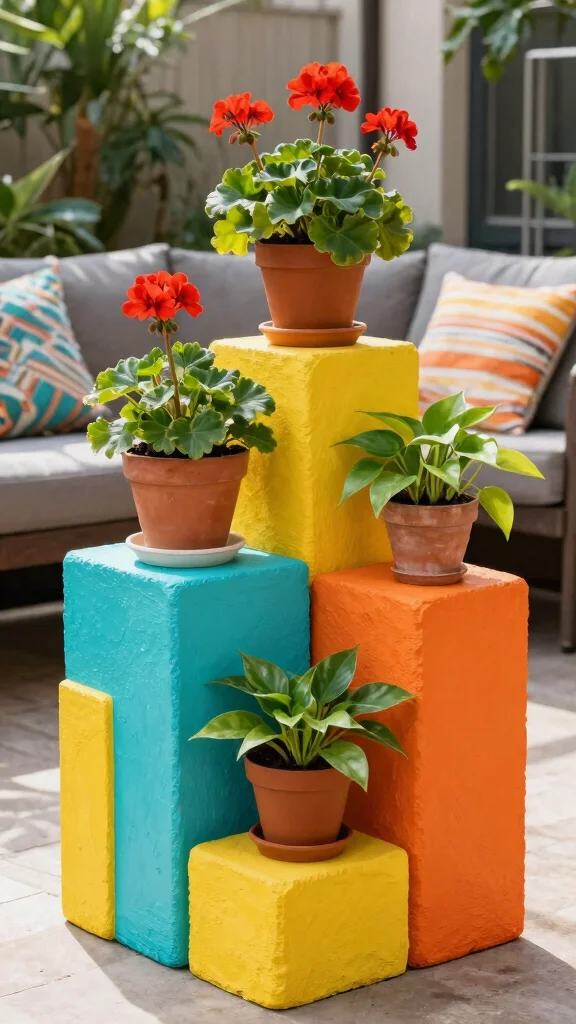
Why stick to dull gray when you can brighten up your space with colorful cinder blocks? Adding vibrant colors to your plant stand can make your outdoor area pop with personality. Whether you choose bold primary colors or soft pastels, colorful blocks offer a playful twist that can transform any garden into a lively retreat.
For a successful colorful block stacking project, opt for outdoor paint formulated for concrete to withstand the elements. Play around with different orientations by mixing vertical and horizontal placements for added visual interest. Pairing your painted blocks with pots in complementary colors creates a harmonious look.
Here are some tips for colorful stacking:
– Select outdoor paint for durability.
– Mix orientations for visual flair.
– Pair blocks with matching pots.
This fun and creative project is perfect for limited spaces, allowing your personality to shine. The vibrant contrast between the colorful blocks and your plants creates a striking focal point that invites admiration.
Colorful Block Stacking
Editor’s Choice

KILZ Decorative Concrete Coating, Slip-Resistant Gray Paint with Stone-L…

Acacia Grove Mini Cinder Blocks with Pallet, 1/12 Scale (48 Pack)
3. Multi-Level Cinder Block Stand
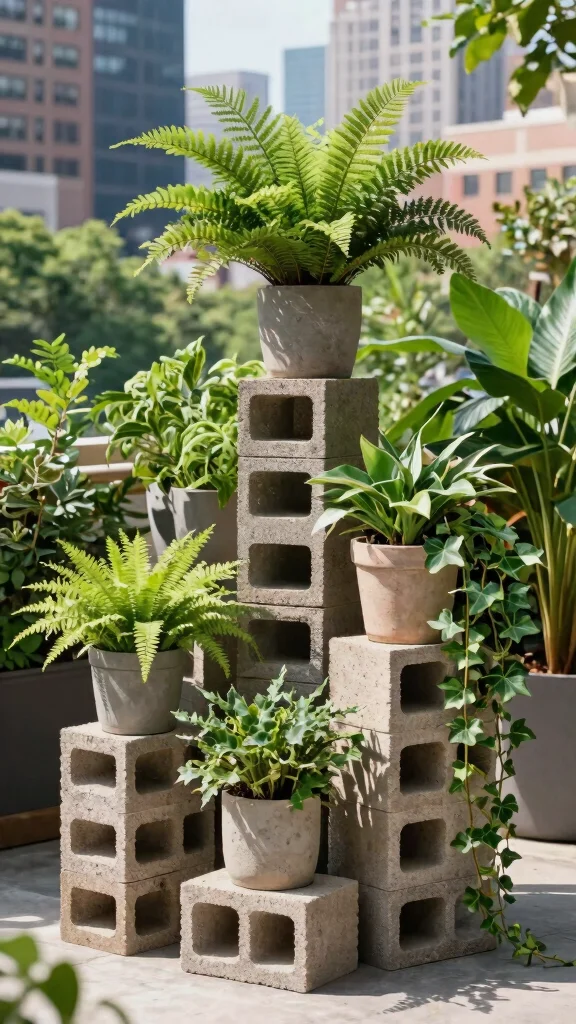
A multi-level cinder block stand is an excellent way to maximize visibility while adding a unique design element to your garden. By stacking blocks in various configurations, you’ll create distinct levels that elevate your plants and highlight their growth stages. This setup not only expands your plant collection but also simplifies plant care and maintenance.
To craft your multi-level stand, use blocks of different sizes and rotate them for an asymmetrical appearance. Consider adding a wooden or glass shelf for additional planting space, and incorporate trailing plants on higher levels for a cascading effect.
Steps to create your multi-level stand:
– Use various sized blocks for an asymmetrical look.
– Add a shelf for more planting opportunities.
– Use trailing plants for a cascading effect.
This adaptable design suits both cozy urban gardens and spacious patios, making it ideal for gardeners at any skill level. You can easily rearrange your layout and swap plants seasonally, keeping your outdoor area dynamic and engaging.
📹 Related Video: 7 Cinder Block DIYs
Multi-Level Cinder Block Stand
Editor’s Choice

Melphoe 25Pcs Mini Garden Hand Transplanting Succulent Tools Set, 39.4″ …

4. Cinder Block with Wooden Accents

Blending cinder blocks with wooden elements creates a beautiful contrast that elevates your garden’s aesthetic. Wooden shelves or planters can soften the industrial vibe of the blocks, bringing warmth and a cozy atmosphere to your outdoor space.
To seamlessly integrate wood into your design, consider using reclaimed wood for an eco-friendly touch that complements the cinder blocks. You can create a hybrid stand by stacking blocks at the bottom and placing wooden planks on top for planting. Adding wooden details like hanging planters or shelves can enhance texture and charm.
Tips for integrating wood:
– Use reclaimed wood for a rustic touch.
– Create a stand with blocks below and wood above.
– Add wooden accents for added texture.
This versatile design works beautifully in both modern and rustic settings. The combination of materials not only looks stylish but also provides practical benefits, such as extra storage for gardening tools or decorative items.
Fun fact: A chic cinder block plant stand with reclaimed wood adds warmth and doubles space. A simple setup uses a 3-block base plus a 4-foot plank to create a two-tier stand that safely holds heavier pots.
You might also like


Cinder Block with Wooden Accents
Editor’s Choice

EasyFlex No-Dig Landscape Edging with Anchoring Spikes, 2.7 in Tall Deco…

Rustic Revival | Handmade Reclaimed Barnwood Craft Bundle | Unfinished A…

Thompson’s WaterSeal Multi-Surface Waterproofer Stain, Clear, 1 Gallon
5. Vertical Cinder Block Garden
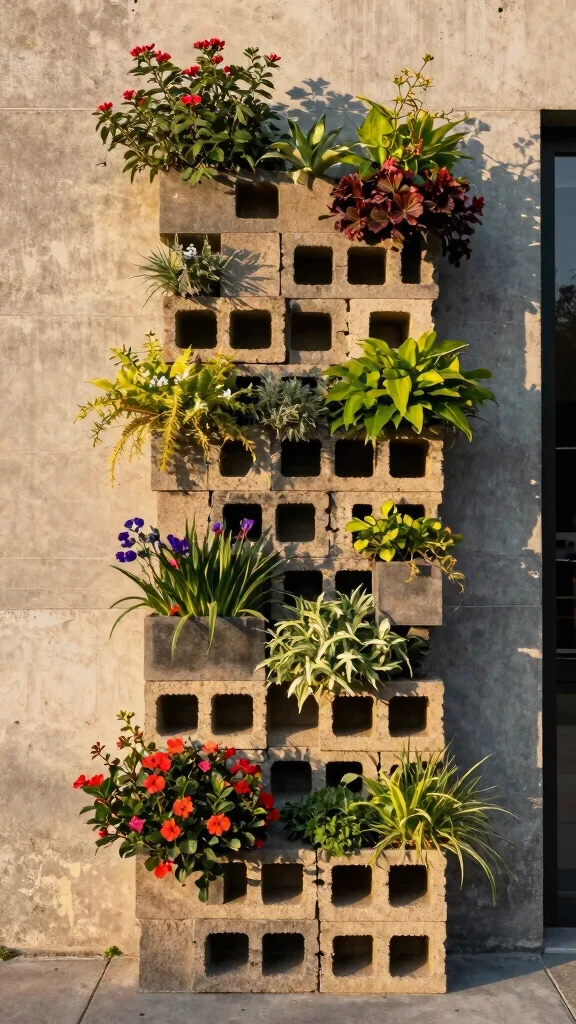
Turn your cinder block plant stand into a vertical garden, a perfect solution for saving space while making a bold statement. This design is ideal for small patios or balconies where floor space is limited. By stacking cinder blocks vertically, you’ll create an eye-catching display that draws the eye upward, beautifully showcasing your plants.
To create a vertical garden, arrange the cinder blocks in a single column or stagger them for improved stability. Fill each block with soil for planting or use pots for flexibility. Opt for small trailing plants that can cascade over the edges for a dramatic effect.
Steps to create your vertical garden:
– Stack blocks in a column or stagger for stability.
– Fill blocks with soil or pots for planting.
– Choose trailing plants for a dramatic look.
This design maximizes your gardening space while adding artistic flair to your urban decor. It can become a captivating conversation piece that enhances the beauty of any outdoor setting.
Key Trade-offs & Our Top Pick
When choosing a cinder block plant stand, it’s essential to weigh the pros and cons of different designs. Here’s a comparison of some popular options to help you make an informed decision.
Option 1: Minimalist Cinder Block Arrangement
– Pros:
– Simple and modern look that fits various decor styles.
– Easy to assemble with minimal tools.
– Cons:
– Limited height and depth, which can restrict plant variety.
– Less stability for heavier pots without additional support.
– Best for: Small spaces or urban gardens where simplicity is key.
Option 2: Colorful Block Stacking
– Pros:
– Brightens up your garden with fun colors.
– Easy to customize according to your personal style.
– Cons:
– May fade over time if exposed to direct sunlight.
– Requires more maintenance to keep colors vibrant.
– Best for: Gardeners looking to add a splash of personality to their outdoor area.
Option 3: Multi-Level Cinder Block Stand
– Pros:
– Provides multiple tiers for various plants.
– Maximizes vertical space, making it ideal for small gardens.
– Cons:
– Can be more challenging to assemble.
– May require more weight at the base for stability.
– Best for: Gardeners with limited floor space who want to grow a variety of plants.
Option 4: Cinder Block with Wooden Accents
– Pros:
– Combines the rustic look of wood with the durability of cinder blocks.
– Offers a unique design that stands out.
– Cons:
– Wood may require more maintenance and care.
– Cost may be higher compared to standard cinder blocks.
– Best for: Those who appreciate a blend of modern and rustic styles.
Option 5: Eco-Friendly Cinder Block Design
– Pros:
– Made from recycled materials, reducing environmental impact.
– Often more affordable and available at local sources.
– Cons:
– May lack the refined look of new materials.
– Durability can vary, depending on the source of the blocks.
– Best for: Eco-conscious gardeners who want to minimize their carbon footprint.
Expert Recommendation:
Best Overall: Multi-Level Cinder Block Stand
This option stands out for its versatility and effective use of space. You can grow a variety of plants while keeping your garden organized. It offers great value for money, is easy to customize, and can last for several seasons with proper care. Plus, its multi-tiered design allows you to display plants at various heights, adding depth to your outdoor space.
Why We Picked This:
While the multi-level stand is great for most gardeners, you might prefer the minimalist approach if you’re tight on space. If you love vibrant colors, the colorful block stacking option is perfect for you. Each design serves a different need, so consider your personal style and gardening goals when making your choice!
Vertical Cinder Block Garden
Editor’s Choice

Miracle-Gro Moisture Control Potting Mix – Plant Soil For Container Plan…

Garden Tools Set, 3 Pack Heavy Duty Gardening Tools Set Include Garden S…
Zhanmai 50 Pack Foam Bricks Building Blocks for Kids Foam Cinder Blocks …
6. Cinder Block with Hanging Gardens

Incorporating hanging planters into your cinder block design adds an exciting layer to your garden setup. By creating spaces for hanging pots among the cinder blocks, you introduce movement and depth, making the entire arrangement more dynamic.
For a successful hanging garden, secure your planters with hooks or ropes at varying heights between the blocks. Choose plants that thrive when hung, such as ferns or trailing vines. Mixing different sizes and materials of hanging pots allows for a personalized touch.
Key tips for your hanging garden:
– Secure planters with hooks or ropes.
– Use plants that thrive in hanging positions.
– Mix various sizes and materials for personalization.
This design merges modern gardening with traditional displays, creating a lively and engaging outdoor environment. It’s perfect for urban gardens where maximizing vertical space is essential.
Did you know hanging planters can free up to 40% of floor space in a small patio? With just 3 hooks at varying heights on a cinder block plant stand, you create 4 levels of greenery that feel airy and alive.
Cinder Block with Hanging Gardens
Editor’s Choice

FEED GARDEN Heavy Duty Plant Hooks – 2 Pack 8 Inch Wall Mounted Hanging …

LA JOLIE MUSE Large Hanging Planters – 13 Inch Flower Pots Outdoor Indoo…

EBOOT 2 Pack 48 Inch Large Macrame Plant Hanger Rope to Hang Flower Pot …
7. Eco-Friendly Cinder Block Design
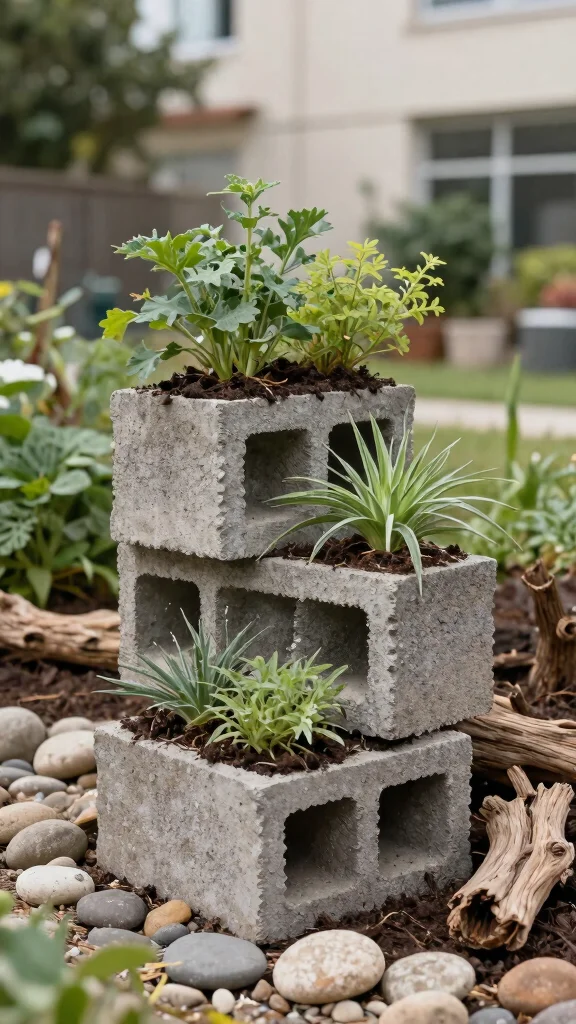
If you’re environmentally conscious, consider using cinder blocks sustainably for your plant stand. By incorporating recycled materials or upcycled elements, you can create an eco-friendly design that champions sustainability while looking stylish.
Start by sourcing your cinder blocks from reclaimed materials to minimize your carbon footprint. Opt for organic soil and native plants to foster a self-sustaining garden habitat. Add natural elements like stones or driftwood to enhance the earthy feel of your setup.
Tips for an eco-friendly design:
– Use recycled materials for your blocks.
– Choose organic soil and native plants.
– Decorate with natural elements for an earthy vibe.
This approach not only enhances the aesthetic of your garden but also positively impacts your local ecosystem. Making thoughtful choices in your gardening practice leads to a beautiful landscape that showcases your commitment to the environment.
You Might Also Like

Eco-Friendly Cinder Block Design
Editor’s Choice


Native Plants for Wildlife Habitat and Conservation Landscaping (Color P…

Back to The Roots Organic Coir, 51 Quart Expanding Soil, Great for Seeds…
8. Custom Cinder Block Creations

Unleash your creativity by customizing your cinder block plant stands! You can decorate them with various materials, textures, and colors to create a truly unique statement piece in your outdoor area. This is your chance to express your personality and style.
For custom creations, use stencils to paint patterns or designs on the blocks. Attach decorative tiles, mosaics, or stones for added color and flair. Experiment with textures by covering some blocks in fabric or rope to achieve a cozy look.
Tips for custom creations:
– Use stencils for personalized designs.
– Attach tiles or mosaics for color.
– Cover blocks in fabric or rope for texture.
This level of personalization ensures your cinder block plant stand reflects your individual style while enhancing the charm of your home garden. It’s a fantastic way to turn a simple gardening project into a fun art piece.
Fun fact: a single cinder block plant stand can become a statement piece—decorate with stencils, tiles, or rope, and you can personalize it in minutes. Customization boosts curb appeal and garden vibes without breaking the budget.
Custom Cinder Block Creations
Editor’s Choice

25 Pcs William Morris Flower Quilting Fabric Scraps, 10”x10” Cotton Fa…

FINGERINSPIRE 4 Styles Woman Stencils 8.3×11.7 Inch Water Drop Woman Ste…
Conclusion

Cinder blocks have come a long way from being mere construction materials to becoming fashionable and functional elements of urban gardening decor. From minimalist designs to colorful creations, there’s a cinder block plant stand idea for every style and preference. Elevate your outdoor spaces with these DIY plant stands that not only showcase your plants but also reflect your unique personality.
So why not start designing your own today? Express your gardening spirit and transform your home garden into a stylish sanctuary!
Note: We aim to provide accurate product links, but some may occasionally expire or become unavailable. If this happens, please search directly on Amazon for the product or a suitable alternative.
This post contains Amazon affiliate links, meaning we may earn a small commission if you purchase through our links, at no extra cost to you.
Frequently Asked Questions
What makes a cinder block plant stand stylish and functional for urban gardening?
A well-designed cinder block plant stand blends sturdy construction with clean, versatile aesthetics that fit urban spaces. For urban gardening, try color blocking, varying heights, and letting the blocks double as legs or shelves. A simple wood plank or metal top makes it stable for pots, and a weatherproof seal or outdoor paint elevates the look. This approach doubles as practical garden decor and sparks good ideas for home garden ideas.
Tip: keep drainage clear with tray liners, secure loose blocks with outdoor-safe mortar or adhesive, and place on a flat surface away from heavy foot traffic to maintain stability.
Finish with a personal touch—paint in a bold accent color, leave natural concrete texture for a minimalist vibe, or mix block colors to create a striking focal point.
How do I customize a DIY plant stand using cinder blocks for different outdoor spaces?
Customizing a DIY plant stand with cinder blocks is all about size, layout, and weatherproofing. Start by measuring your space and deciding on height and footprint. Use a sturdy top plank (wood, metal, or recycled pallet) and choose blocks in a neutral tone or paint them to match your garden decor. For small balconies, build a compact, multi-tier stack; for patios, go wider with a shallow shelf design. Secure with outdoor-safe mortar or brackets, seal wood to resist moisture, and add drainage trays. This is a great example of DIY plant stand that doubles as outdoor furniture for modern gardening and home garden ideas.
Pro tip: drill shallow holes or use pots with liners to prevent staining and keep things organized with plant height variety.
What materials and plants work best with cinder block plant stands for a modern look?
For a modern look, pair cinder blocks with a crisp top (weatherproof wood, metal, or a painted plank). Natural or contrasting colors create sharp lines. Plants: choose compact foliage for on-top display—succulents, herbs, small ornamental grasses—and trailing vines for higher tiers. Use planters with drainage and lightweight pots that fit snugly. This works well with modern gardening vibes and home garden ideas while keeping garden decor tasteful.
Remember to check weight limits and use breathable soil to avoid crumbling blocks; rotate plants seasonally to keep the display fresh.
Are cinder block plant stands durable outdoors, and how can I protect them from weather?
Yes, with a few simple protections. Concrete blocks are sturdy, but color and wood tops need care. Seal the blocks with a breathable concrete sealant or paint in an outdoor finish to resist moisture and cracking. Use a weatherproof top plank and consider raised design to avoid ground dampness. Bring in for winter in freezing climates. Add drainage trays and non-slip pads. This approach supports outdoor furniture durability and keeps your garden decor stylish through the seasons.
Can I scale a cinder block plant stand for small balconies or larger patios, and what layout works best?
Absolutely. Cinder blocks are modular, so you can stack them to exact height or spread across a footprint. For a balcony, go vertical with a tall, slender stack or a wall-mounted grid. For patios, create a staggered, multi-tier plan with several blocks and a top plank to support more pots. Use a staggered grid or stepped profile to save space while keeping plants accessible. This flexible approach fits urban gardening decor and home garden ideas, while still staying on budget and easy to assemble as a DIY plant stand project.
Related Topics
cinder block plant stand
urban gardening
garden decor
DIY plant stand
modern gardening
outdoor furniture
budget friendly
easy projects
home garden ideas
minimalist design
stylish plant stands
creative gardening